
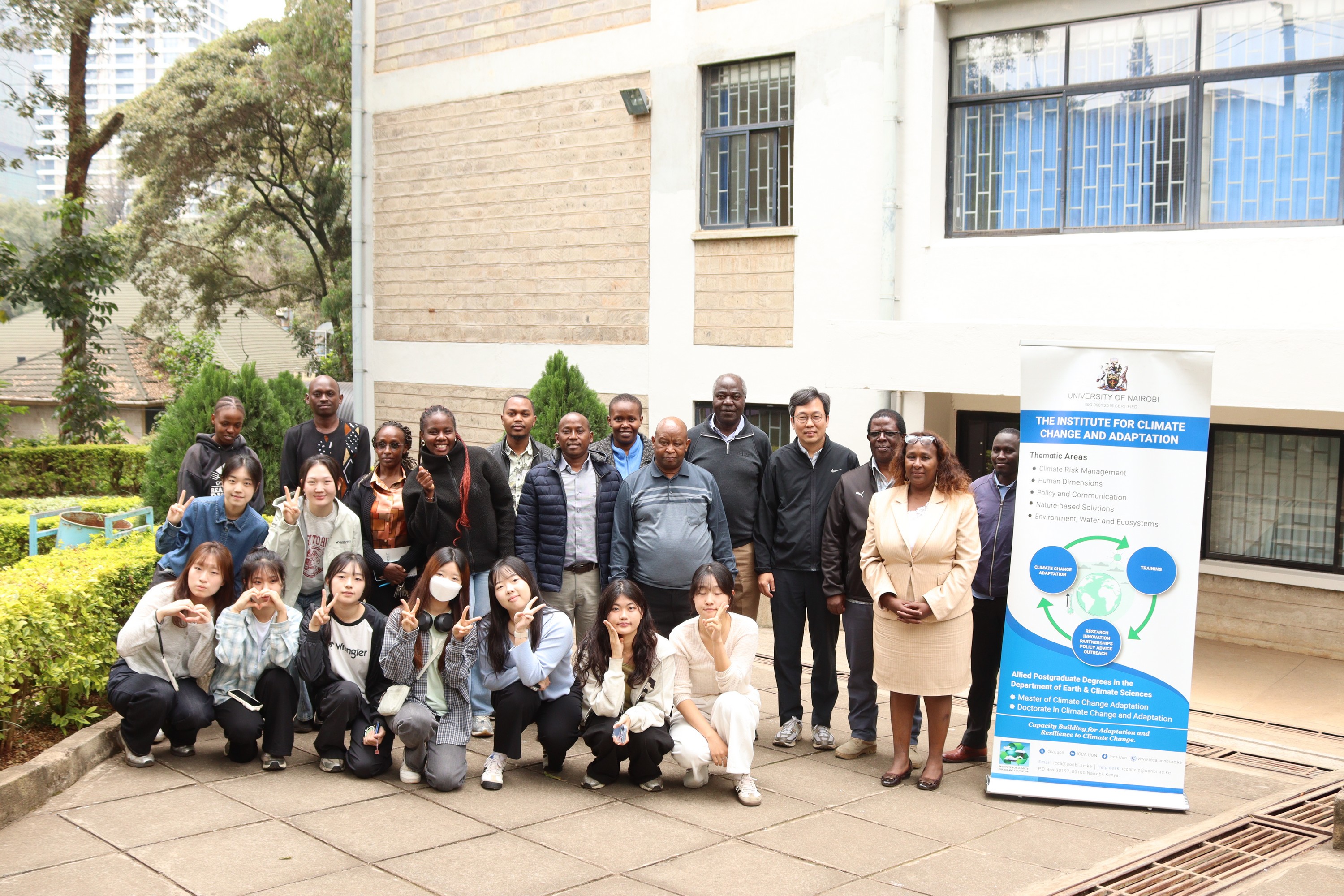
GEOID AND EWHA WOMANS UNIVERSITY VISITS UON, ECS
The University of Nairobi's Department of Earth and Climate Sciences hosted representatives from Geoid Technologies Ltd and RainbirdGEO on Tuesday, 18 August 2026, at the University of Nairobi's Chiromo Campus for fruitful discussions on emerging technologies, climate intelligence, weather nowcasting and early warning systems together with Ten (10) Engineering Post-Graduate Students from the Ewha Womans University, South Korea
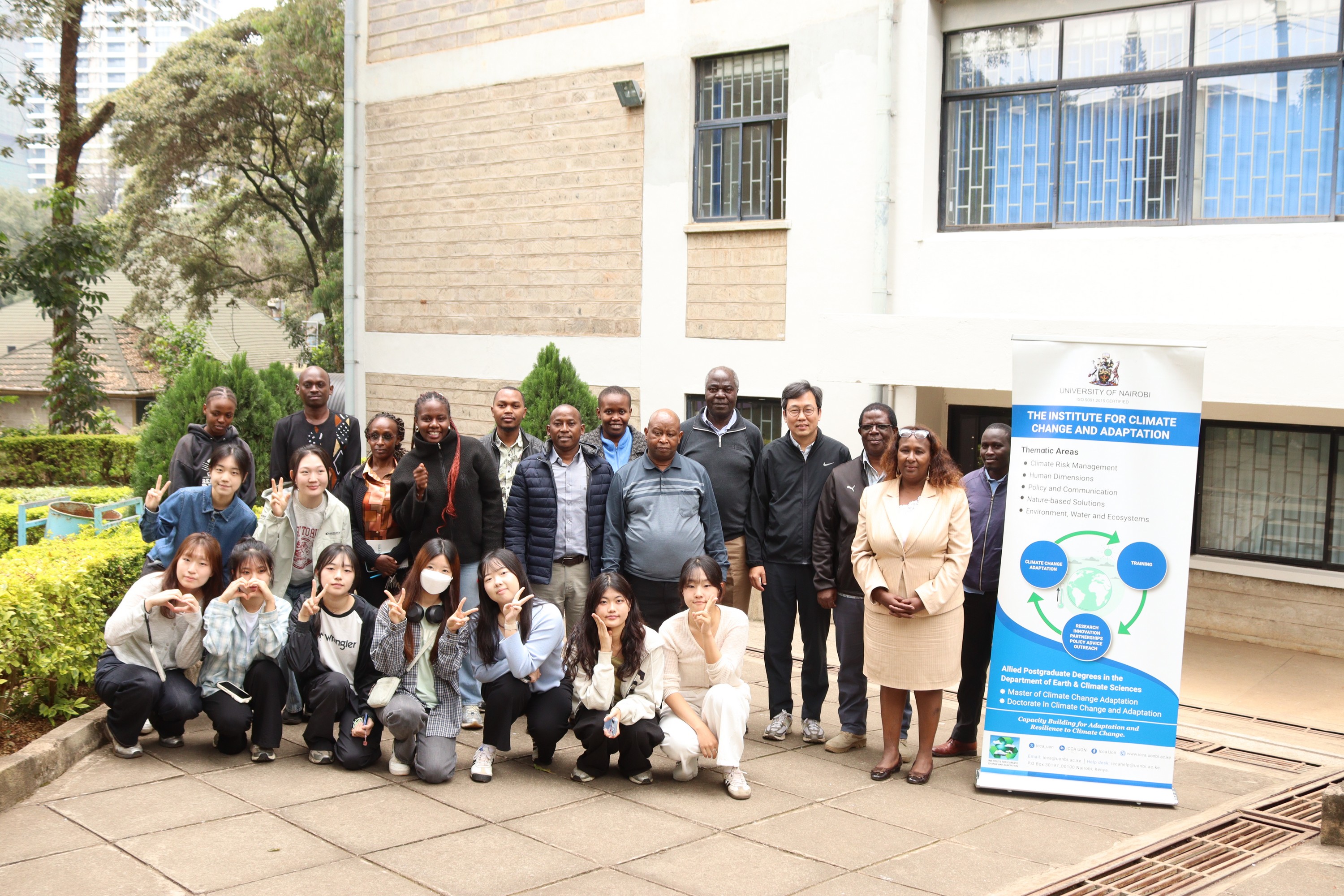
The meeting brought together experts, researchers and students from the three institutions to explore areas of collaboration and partnership aimed at strengthening climate research, geospatial technologies, weather monitoring and early warning capabilities in Kenya and the wider African region.
Harnessing Emerging Technologies for Climate and Weather Intelligence
Discussions focused on the rapidly evolving role of advanced geospatial infrastructure, Global Navigation Satellite System (GNSS) technologies, satellite observations and Artificial Intelligence in improving the monitoring and prediction of high-impact weather events.
The Department of Earth and Climate Sciences highlighted the importance of strengthening collaboration between academia, industry and technology innovators to address the growing challenges associated with climate variability, extreme weather events and disaster preparedness.
Such partnerships present important opportunities for translating cutting-edge technologies and scientific research into practical solutions that can support communities, governments and institutions in climate adaptation and disaster risk reduction.
Geoid Technologies: Advancing GNSS-Based Weather Monitoring
Geoid Technologies Ltd, a Nairobi-based company specializing in geospatial, GNSS and drone technologies, shared insights into its innovative Kenya Precision Positioning Infrastructure Network (KePPIN).
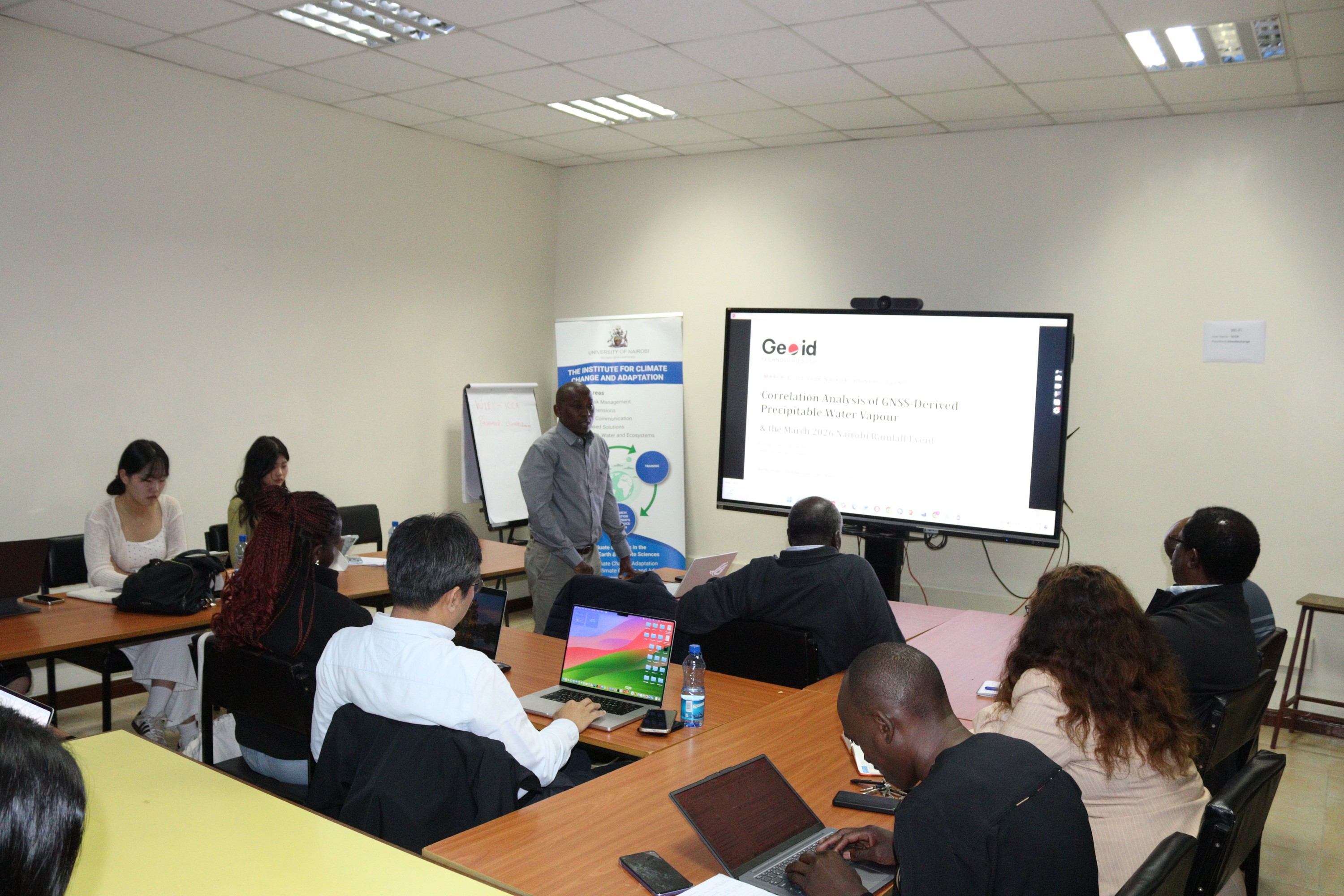
KePPIN is a national network of Continuously Operating Reference Stations (CORS) that streams high-rate GNSS data across Kenya. Beyond supporting precise positioning and geospatial applications, the network provides an important opportunity for atmospheric monitoring through the generation of GNSS-derived Precipitable Water Vapour (PWV) measurements.
PWV provides a direct ground-based measure of atmospheric moisture, an important variable in understanding rainfall formation and supporting short-term weather forecasting and nowcasting.
Building on this infrastructure, Geoid Technologies has developed SpatialX GeoMet, a live weather-intelligence platform currently under pilot deployment. The platform transforms the KePPIN CORS/GNSS network into a high-resolution, short-lead weather nowcasting system, demonstrating the growing potential of geospatial infrastructure in supporting climate services and early warning systems.
The discussions explored potential opportunities for collaboration in research, validation of emerging technologies, data analysis, capacity building and the application of GNSS-derived atmospheric observations in weather and climate research.
RainbirdGEO Brings Satellite and AI Expertise
The meeting also provided an opportunity to engage with RainbirdGEO, a South Korean climate-intelligence company specializing in satellite-based weather nowcasting.
RainbirdGEO utilizes Artificial Intelligence algorithms to fuse observations from geostationary satellites, including South Korea's GK2A satellite and Europe's Meteosat satellite systems, to detect and predict high-impact weather events in real time.
The technology is designed to support the monitoring and prediction of phenomena such as thunderstorms, heavy rainfall, flash floods and lightning across the Asia-Pacific and African regions.
The RainbirdGEO delegation was led by Prof. Choi Yongsang, the company's Chief Executive and Technology Officer, who also serves as a Supervising Professor at Ewha Womans University in South Korea.
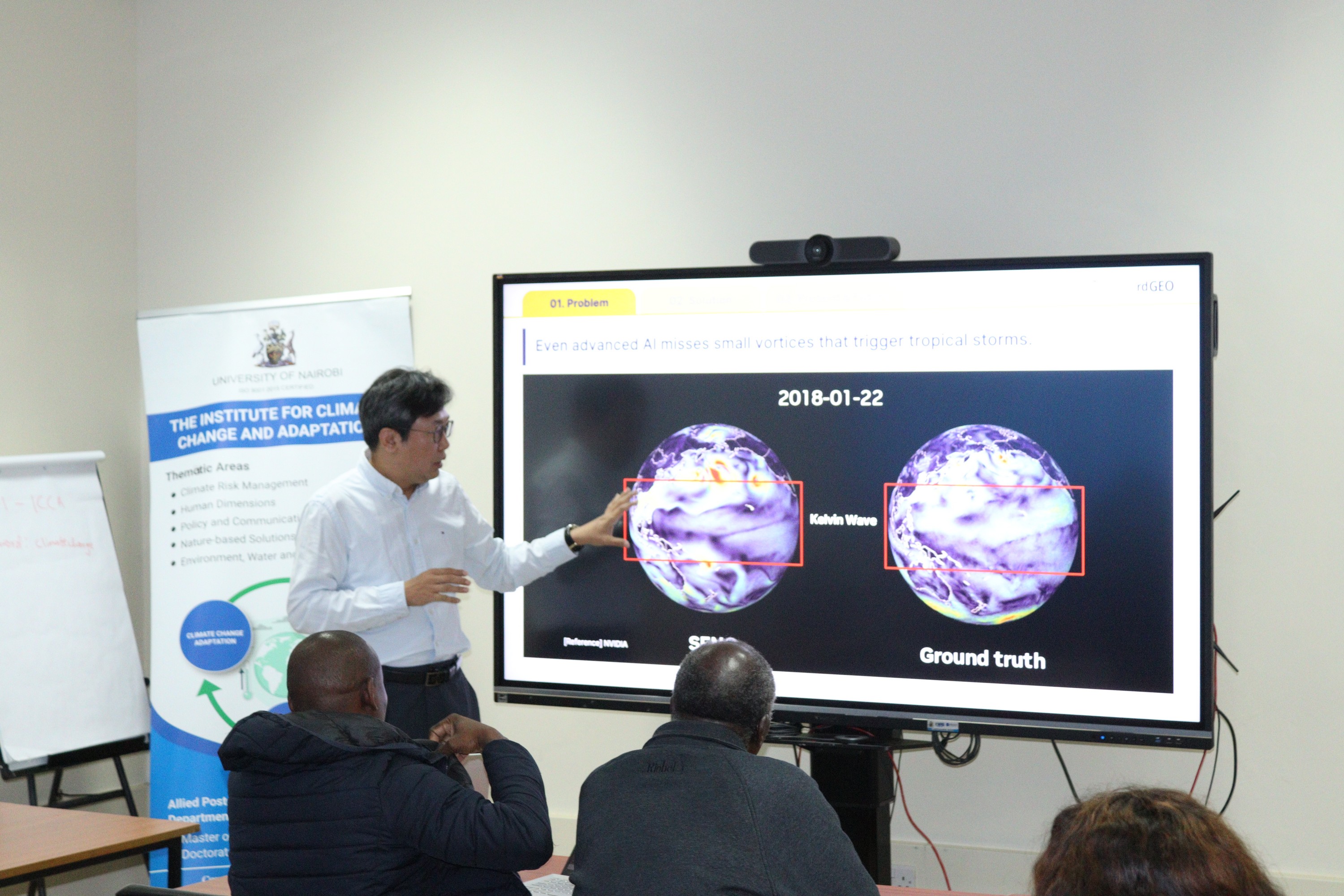
The discussions provided an opportunity to exchange ideas on the application of satellite observations, Artificial Intelligence and advanced data-processing techniques in improving weather nowcasting and early warning, particularly within the African context.
Opportunities for Student Engagement and International Exchange
A key highlight of the visit was the participation of engineering students accompanying the RainbirdGEO delegation. The delegation expressed interest in engaging with students from the University of Nairobi to promote academic interaction, knowledge exchange and possible student exchange opportunities.
The meeting explored ways in which students could benefit from interactions with industry professionals, international researchers and fellow students working in emerging areas of engineering, climate technology, satellite applications and Artificial Intelligence.
Such engagements are expected to provide valuable exposure to practical applications of scientific and technological knowledge while opening opportunities for collaborative learning, joint research and international exchange programmes.
Strengthening Academia–Industry–International Collaboration
The meeting concluded with a shared commitment to continue exploring areas of partnership among the University of Nairobi, Geoid Technologies Ltd and RainbirdGEO.
Potential areas of collaboration discussed included:
-
Climate and weather research
-
Weather nowcasting and early warning systems
-
GNSS-derived atmospheric observations
-
Satellite-based climate intelligence
-
Artificial Intelligence applications in weather prediction
-
Research data sharing and validation
-
Joint research and innovation projects
-
Student training and capacity building
-
Industry–academia engagement
-
Student and academic exchange programmes
The engagement demonstrated the importance of bringing together academic institutions, local technology companies and international partners in addressing increasingly complex climate and environmental challenges.
By combining the University of Nairobi's expertise in Earth and climate sciences with Geoid Technologies' GNSS and geospatial infrastructure and RainbirdGEO's satellite and AI-powered climate intelligence capabilities, the three institutions have an opportunity to develop innovative solutions that could contribute significantly to improved weather monitoring, early warning and climate resilience in Kenya, Africa and beyond.
The Department of Earth and Climate Sciences looks forward to building on the discussions and pursuing meaningful partnerships that will advance research, innovation, student development and the application of emerging technologies in addressing climate-related challenges.