
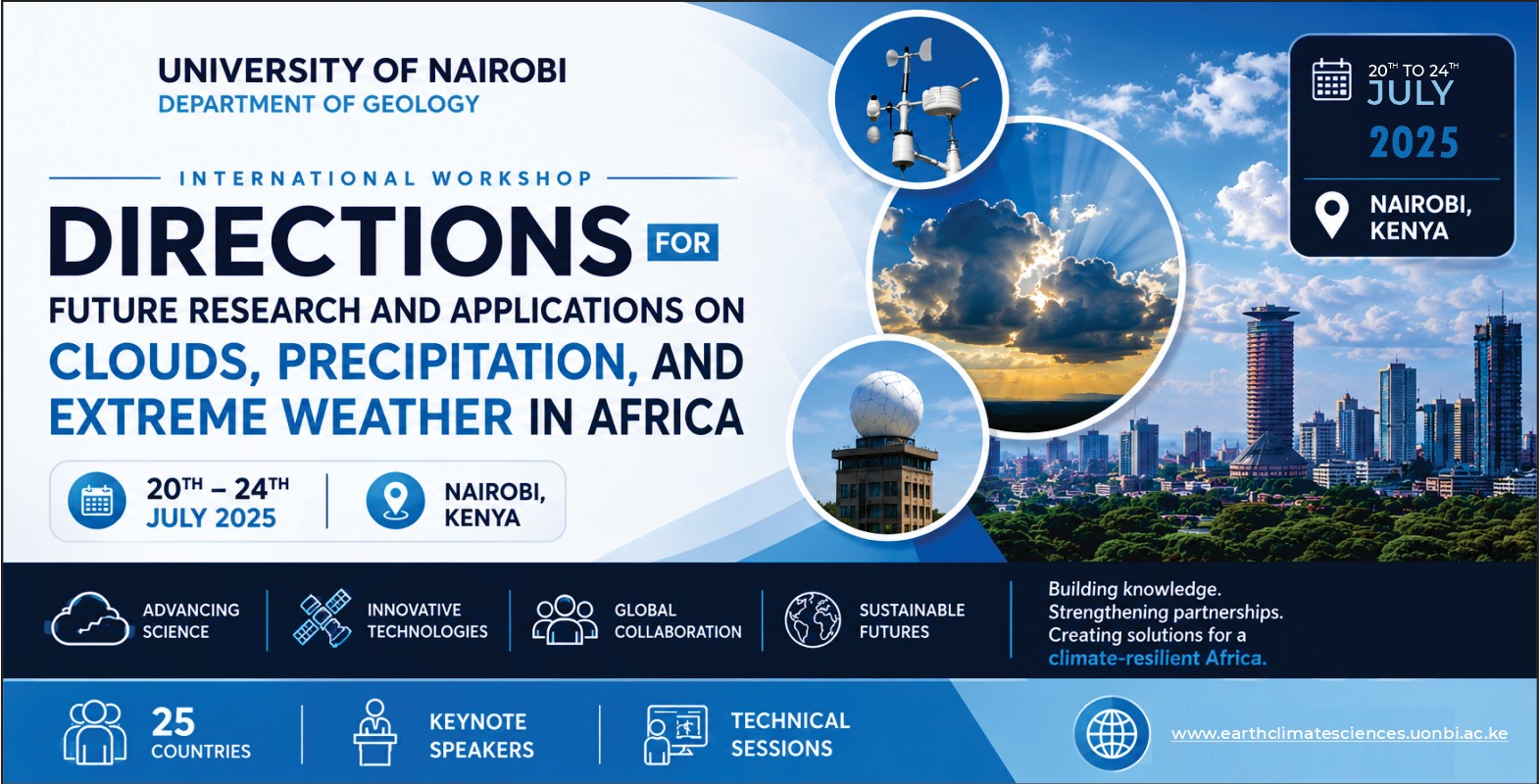
INTERNATIONAL WORKSHOP ADVANCES RESEARCH ON CLOUDS, PRECIPITATION AND EXTREME WEATHER
University of Nairobi Hosts Landmark International Workshop on Directions for Future Research and Applications on Clouds, Precipitation, and Extreme Weather in Africa.
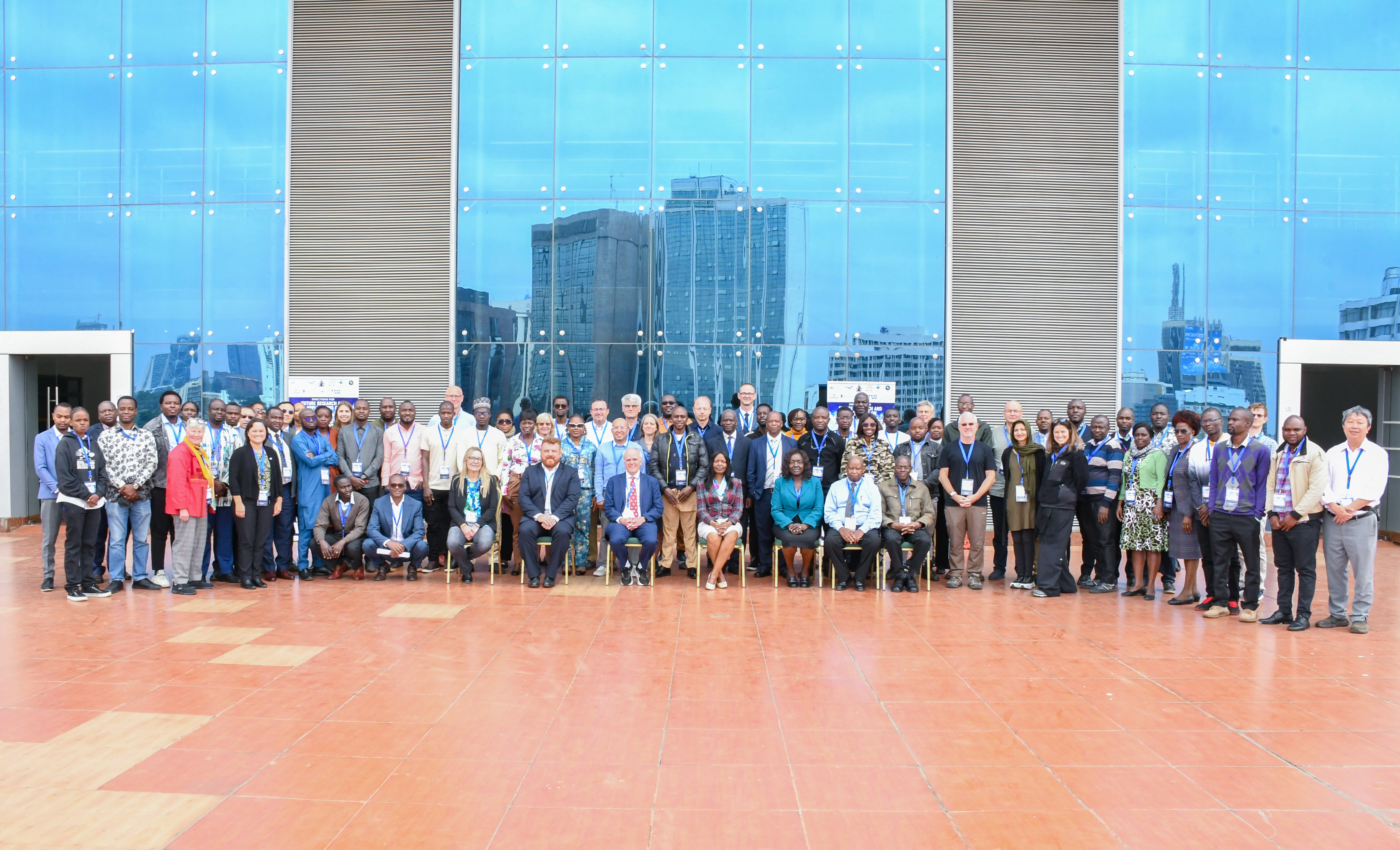
The University of Nairobi successfully hosted the international workshop "Directions for Future Research and Applications on Clouds, Precipitation, and Extreme Weather in Africa," bringing together leading researchers, scientists, policymakers, and practitioners from 25 countries across Africa, Europe, and the United States of America. The workshop provided a unique platform for advancing collaboration in atmospheric sciences, climate research, and sustainable development.
Held under the leadership of the Department of Geology within the Faculty of Science and Technology, the workshop focused on strengthening scientific understanding of cloud processes, precipitation dynamics, and extreme weather events, while exploring innovative technologies and collaborative approaches to improve climate resilience across the African continent.
The event featured distinguished keynote speakers, technical presentations, panel discussions, and interactive sessions covering a broad range of topics including:
-
Cloud microphysics and atmospheric processes
-
Advances in precipitation measurement and modelling
-
Extreme weather prediction and early warning systems
-
Climate change impacts across Africa
-
Weather radar and satellite observations
-
Artificial Intelligence and machine learning applications in meteorology
-
Hydrological forecasting and water resource management
-
Cross-border scientific collaboration and capacity building
Throughout the workshop, participants exchanged cutting-edge research findings and practical experiences aimed at improving weather forecasting, disaster preparedness, agricultural planning, water resource management, and climate adaptation strategies.
The workshop underscored the importance of international partnerships in addressing complex environmental challenges. Researchers from universities, meteorological agencies, government institutions, and international organisations shared experiences and identified opportunities for future collaborative research, student exchanges, joint grant proposals, and technological innovation.
Speaking during the workshop, organisers emphasised the growing need for interdisciplinary research that integrates atmospheric science, hydrology, remote sensing, artificial intelligence, and geospatial technologies to enhance Africa's preparedness for increasingly frequent and intense weather extremes.
The discussions also highlighted the critical role of high-quality observational networks, modern forecasting systems, and open scientific collaboration in supporting evidence-based policy formulation and sustainable development across the continent.
As one of East Africa's premier research institutions, the University of Nairobi reaffirmed its commitment to advancing scientific excellence, promoting international research partnerships, and developing innovative solutions to address emerging environmental and climate-related challenges.
The successful conclusion of the workshop marks another important milestone in strengthening global scientific cooperation and reinforces the University's position as a regional hub for research, innovation, and capacity development in climate science and environmental sustainability.
The University of Nairobi extends its sincere appreciation to all keynote speakers, researchers, sponsors, partner institutions, organising committee members, and participants whose contributions made the workshop a resounding success. The knowledge shared and partnerships established during the event are expected to inspire future collaborative initiatives that will contribute significantly to improving climate resilience and sustainable development in Africa and beyond.